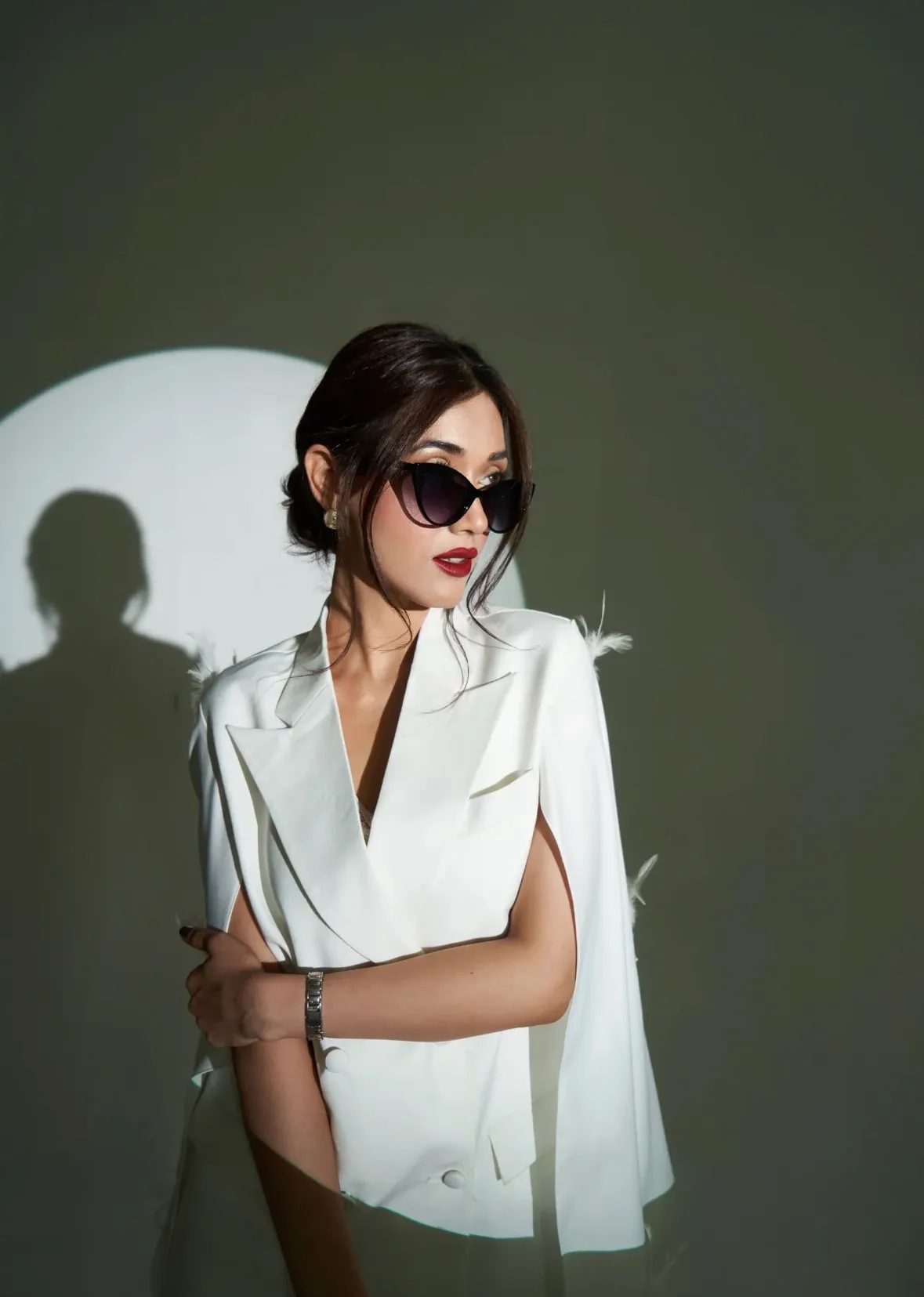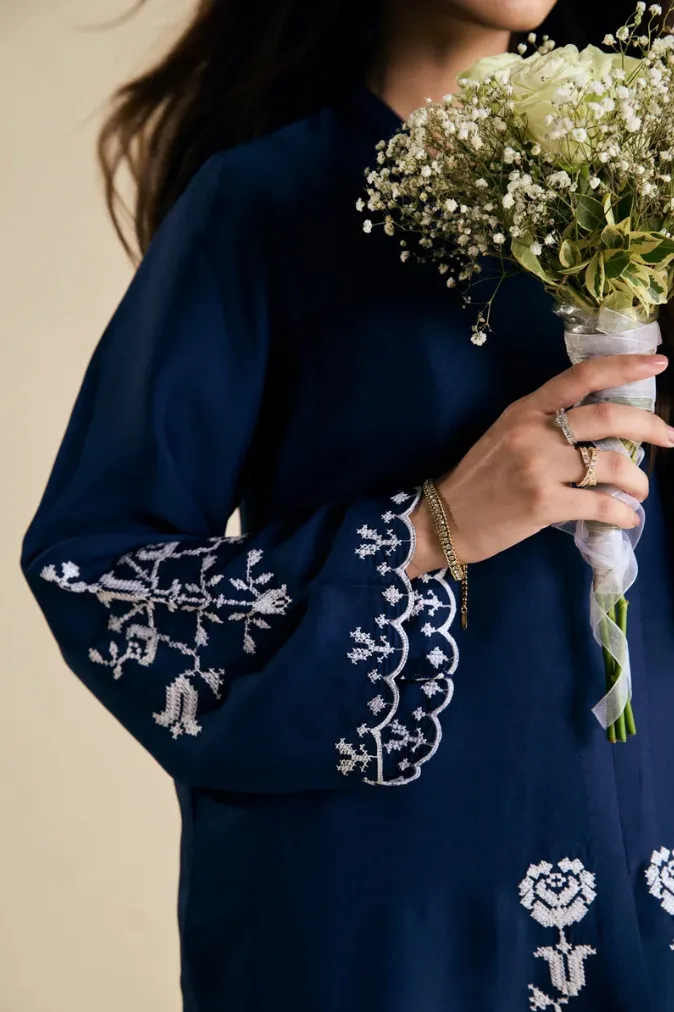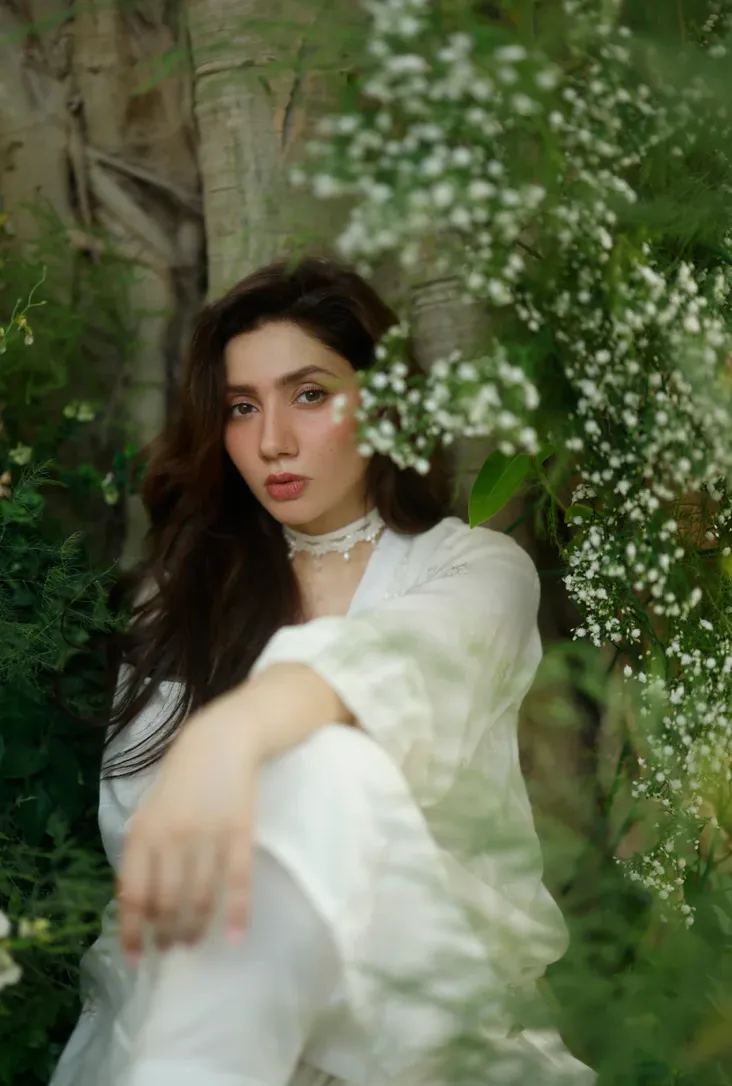
It began, fittingly, with a complaint about missing white kurtas. In February 2023, a new Instagram account appeared, opening with Mahira Khan messaging her team to ask for them back from her closet — a joke, and also the clearest possible blueprint.
From that moment, M by Mahira positioned itself not as a celebrity label chasing reinvention, but as one rooted in repetition, memory, and the kind of wardrobe habit that becomes identity.
For years, Mahira’s look has been defined by a white kurta, glass chooriyan, and a pair of khussas, worn on set, at airports, and at home. She once said that if she could wear only one outfit for the rest of her life, it would be a white kurta shalwar, and some of her kurtas were years old, still in rotation.
When the brand launched, it stayed close to that truth: the first pieces were all white, plain, and honest. The collections that followed expanded that language without losing its centre.
Razia, named after Mahira’s Nani, was introduced through intimate details — fresh nargis by the bedside, books on the shelves, the soft sound of bangles — while Sultana Jehaan honoured her Dadi, the first woman who took her to the bazaar, with a story of fabric, taste, and early lessons in beauty.
These were not runway moments or spectacle-driven launches; they were garments framed as memory, and that remains the brand’s distinct point of view.
As M by Mahira moved beyond white, colour entered gradually through Chaap, and festive pieces joined the everyday wardrobe.
The collection names — Bahar, Nazam, Safar Nama, Karwaan, Sukoon, Nour, Gulnaar — were written in both English and Urdu, a detail that speaks to a brand that knows where it comes from and refuses to translate itself away.
Today, the offering extends beyond clothing to handmade leather khussas and kolhapuris made in collaboration with Kolhart, plus unisex fragrances marketed for “the wild, the quiet, and the bold,” with pieces now shipped worldwide and stocked for customers in India and across the diaspora.
That reach has not softened the brand’s stance on price or pace. When M by Mahira launched, the cost of a plain white kurta prompted conversation online, but the label held to its position: it was never built to be fast fashion, only slow, considered, and kept. That is what gives it resonance.
In a market crowded with celebrity labels, M by Mahira stands apart by feeling personal rather than performative, calm rather than loud — and by making the white kurta, once a private constant, feel like a shared style language.
— unravelld.