Most embroidery adds. Cutwork removes. It's the rare craft built on absence. Fabric is cut away, the edges are secured by hand, and the negative space is left to do the work. What's left behind isn't a hole. It's the design. That takes nerve. Every cut is permanent. There's no undoing a snip, and no covering a mistake with another layer of thread. You'll find it everywhere. Hakoba cutwork along a daman.
Fine thread cutwork tracing a neckline. Organza dupattas where the pattern is defined as much by what's missing as by what's there. The fabric changes everything. On heavy silk, cutwork reads architectural, all clean edges and shadow. On sheer organza it softens into something closer to lace. Pakistani fashion is leaning into restraint. Fewer sequins. Less surface noise.
Cutwork has become the answer for detail without the weight. Designers are putting it on capes, kaftans, short shirts and dupattas across luxury pret. The trick is in the pairing: plain fabric around it, so the openwork has room to breathe. The real story is the labour. Every scalloped edge, every finished opening, is someone's steady hand and hours of patience.
In a market built on speed, that kind of work is getting rarer. Which is exactly what makes it more valuable.
Here are nine Pakistani labels doing cutwork their own way:
Kamli Collective
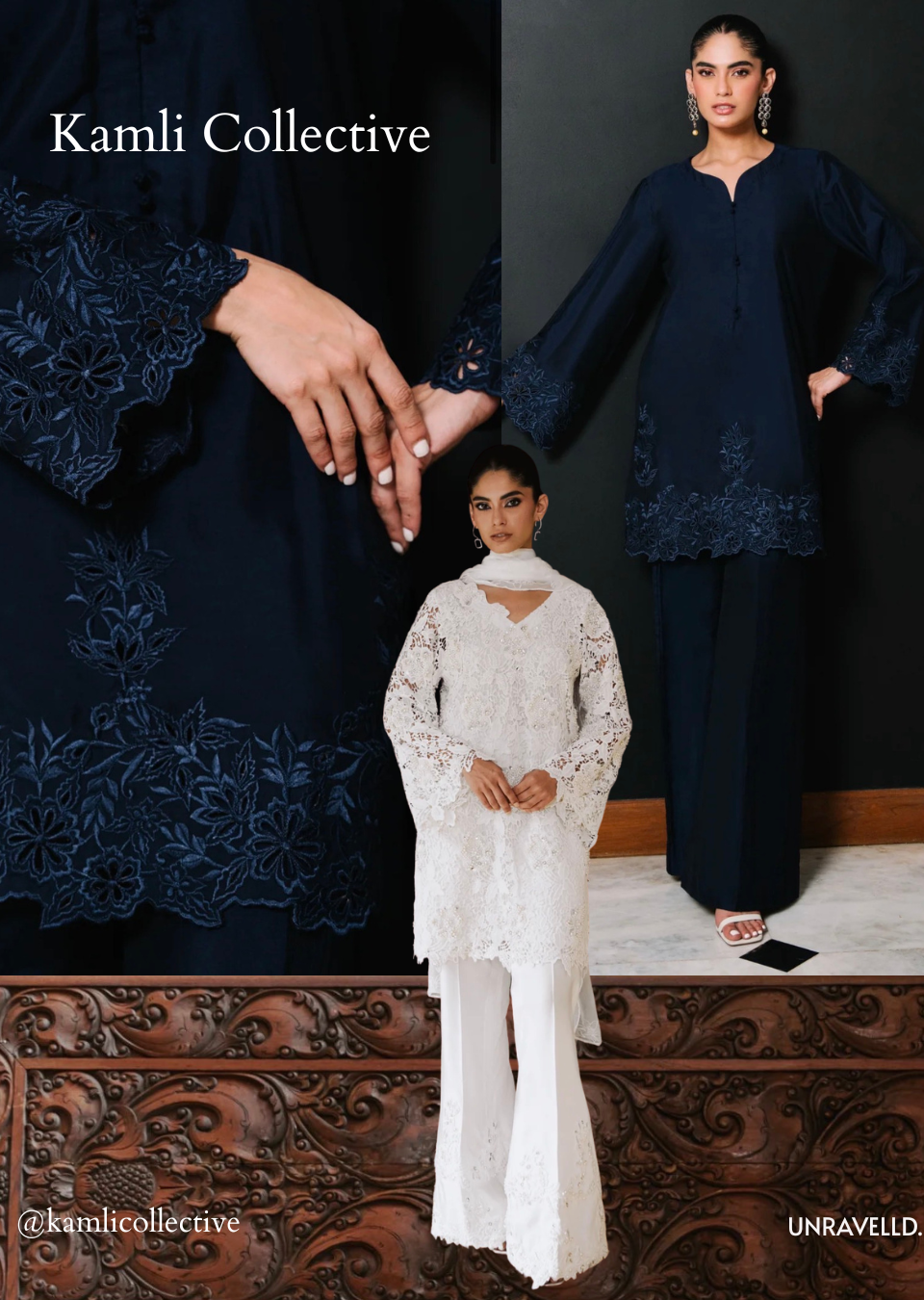
Tone on tone, and all the better for it. Navy cutwork on a navy shirt, so the pattern shows up in shadow rather than contrast. Flowers bloom along the hem and climb the cuffs. The white look goes the other way: openwork so dense it reads like lace, worn with flared trousers finished at the hem.
HUE Pret
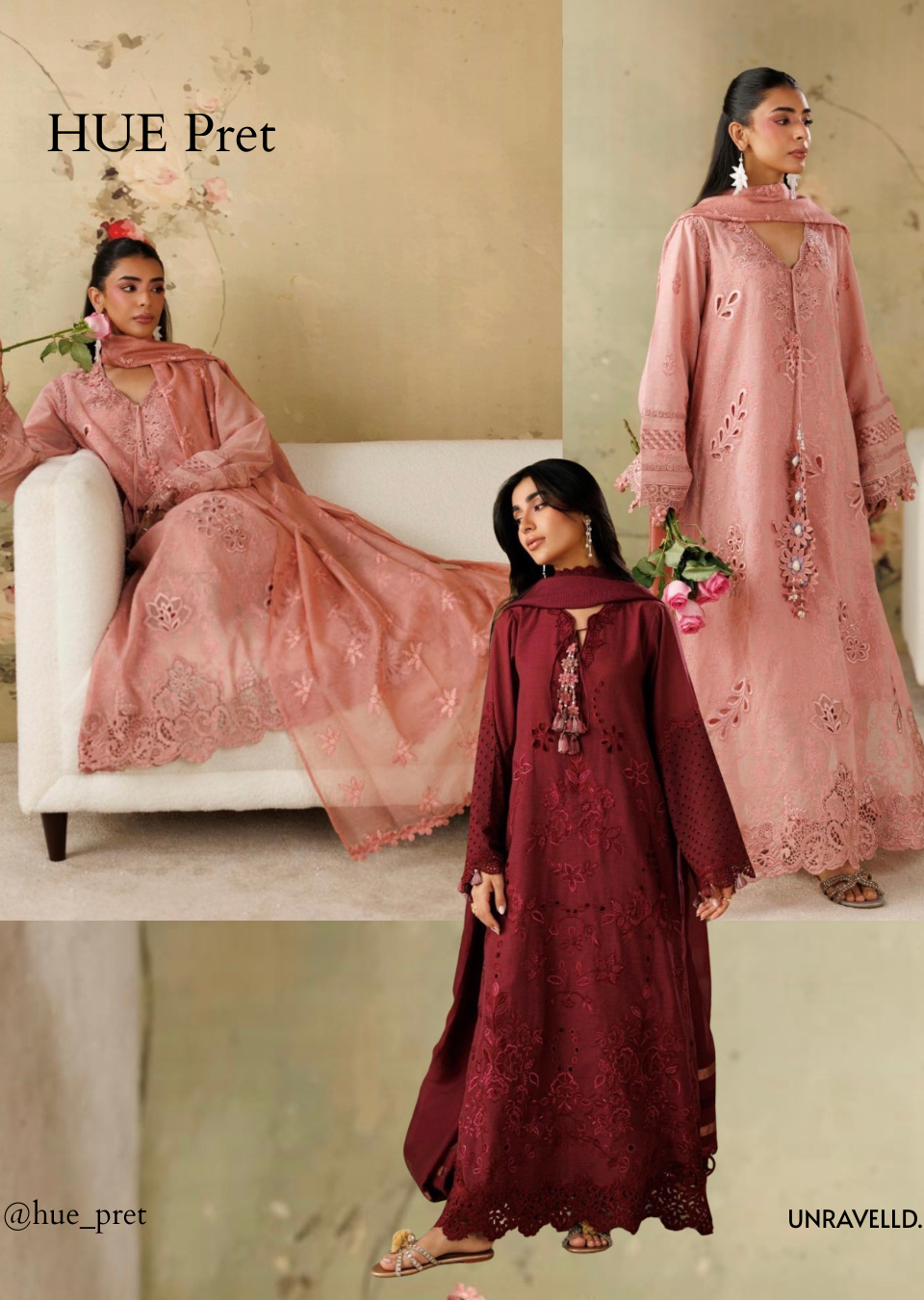
Romantic and soft. Dusty rose and deep maroon, with cutouts scattered across the body and gathered into heavy scalloped borders at the hem. Tassels at the neckline, sheer dupattas trailing behind. The openings are big enough to see from a distance, which makes this the boldest take in the edit.
F&W
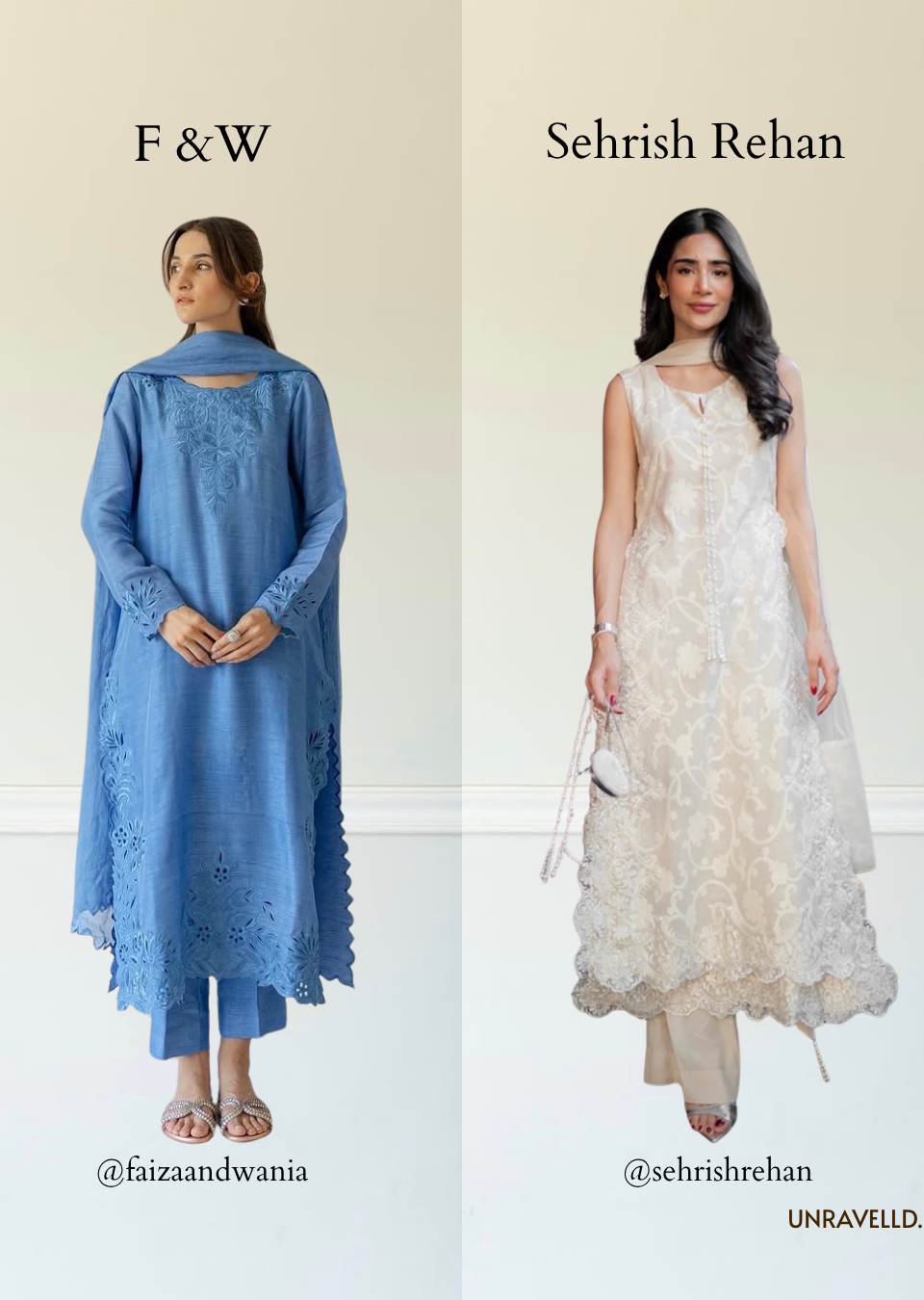
Cornflower blue and quietly confident. The cutwork sits where it matters: a carved neckline, open cuffs, and a scalloped hem that frames the panels. Matching trousers and dupatta keep the whole look in one colour, so the openwork does all the talking.
Sehrish Rehan
Ivory, sleeveless and long. The cutwork swirls across the full length of the shirt and finishes in a deep scalloped hem layered over wide trousers. A line of covered buttons down the front keeps it neat. Evening, without a single sequin.
Anjli Ahuja
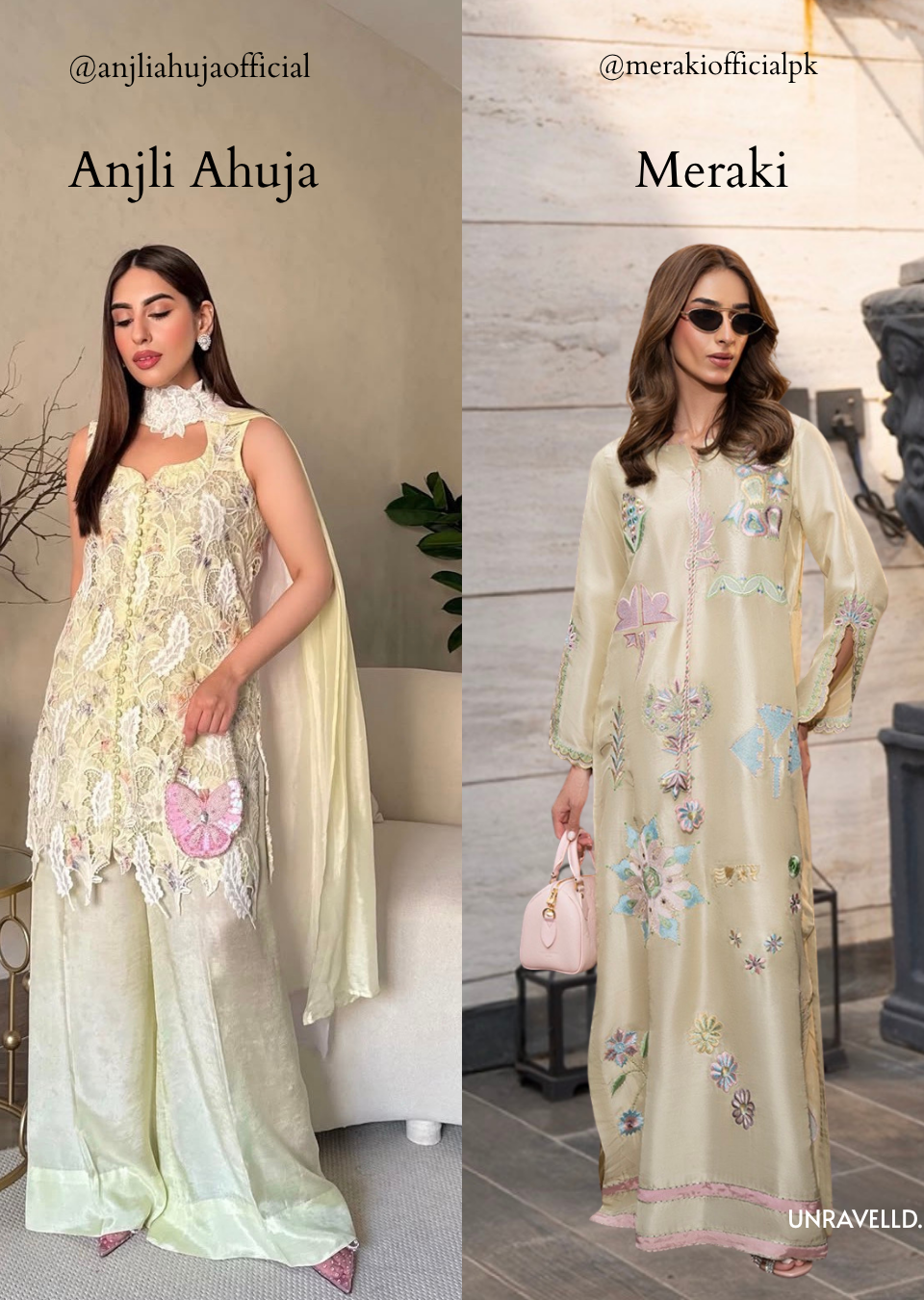
The most textured of the lot. Leaf-shaped cutwork falls down a pale lemon shirt, with a pink beaded butterfly and a ruffled collar for good measure. Wide, washed-silk trousers balance the busy top.
Meraki
Playful, almost painterly. Cutwork motifs in pastel blue, pink and green are dotted across a cream silk shirt like stickers on a page. Slit sleeves and a pink-trimmed hem finish it off. Cutwork, but make it fun.
Zona Shaham
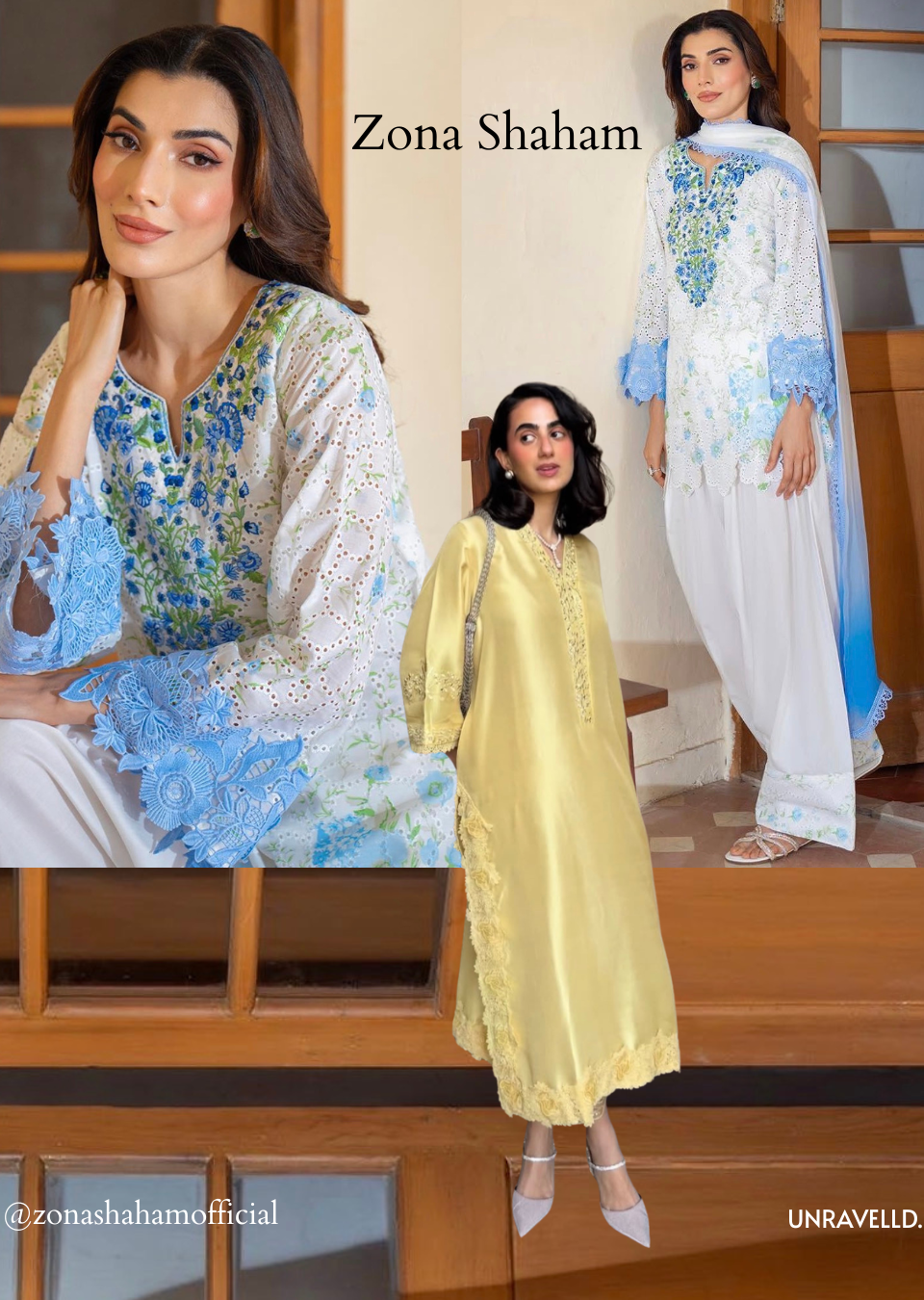
Two moods. One is all-over eyelet in white, with blue floral embroidery at the neck and cuffs of sky-blue cutwork flowers. The other is a butter-yellow silk with cutwork tracing just the placket, sleeves and side seams. Fresh, then refined.
Buzzazi
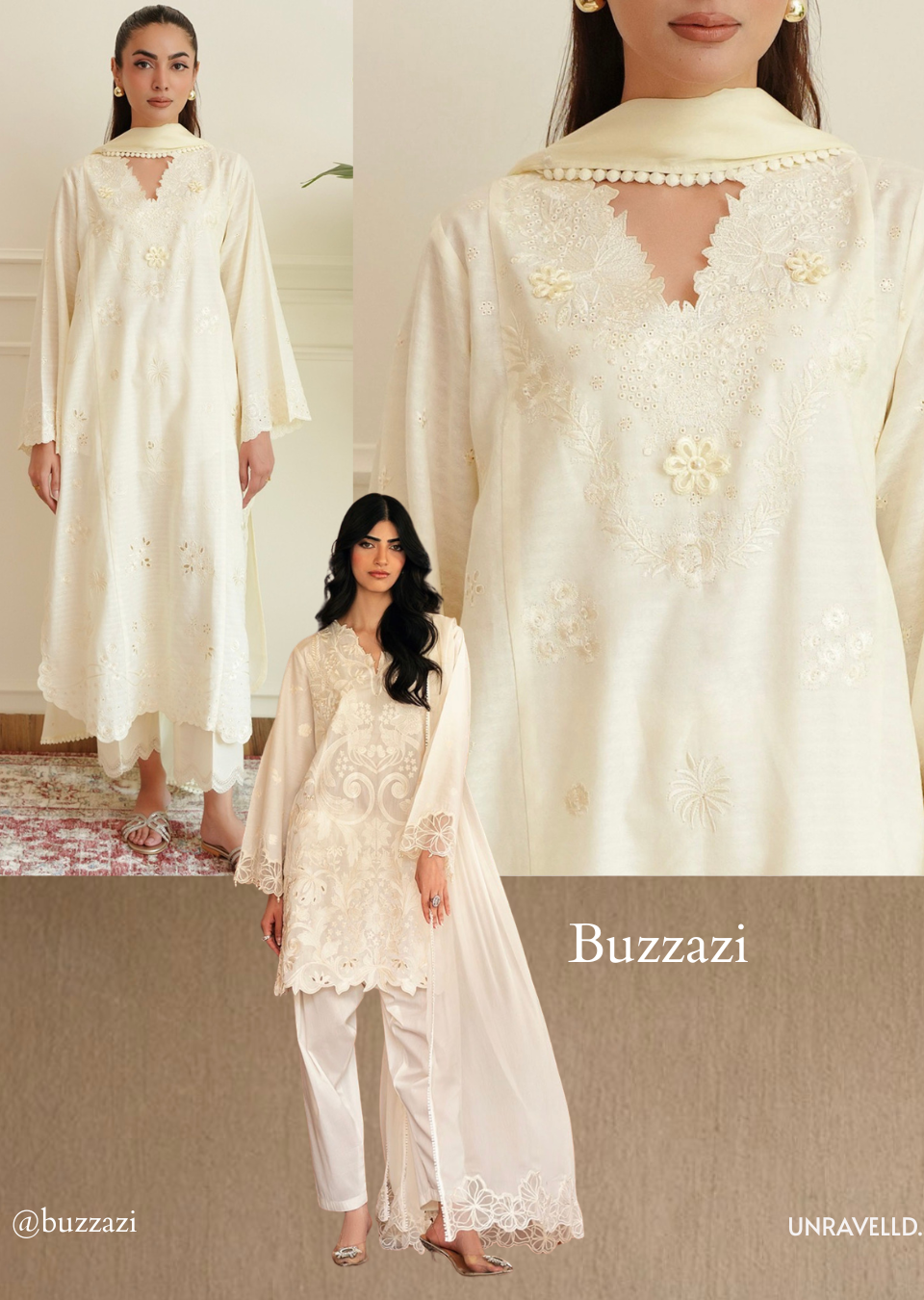
Ivory on ivory, done with care. A carved V at the neck, small cut flowers across the body, and scalloped edges on the sleeves and hem. The longer look keeps it minimal. The short shirt goes fuller, with openwork running into the dupatta's border.
Huraira Collection
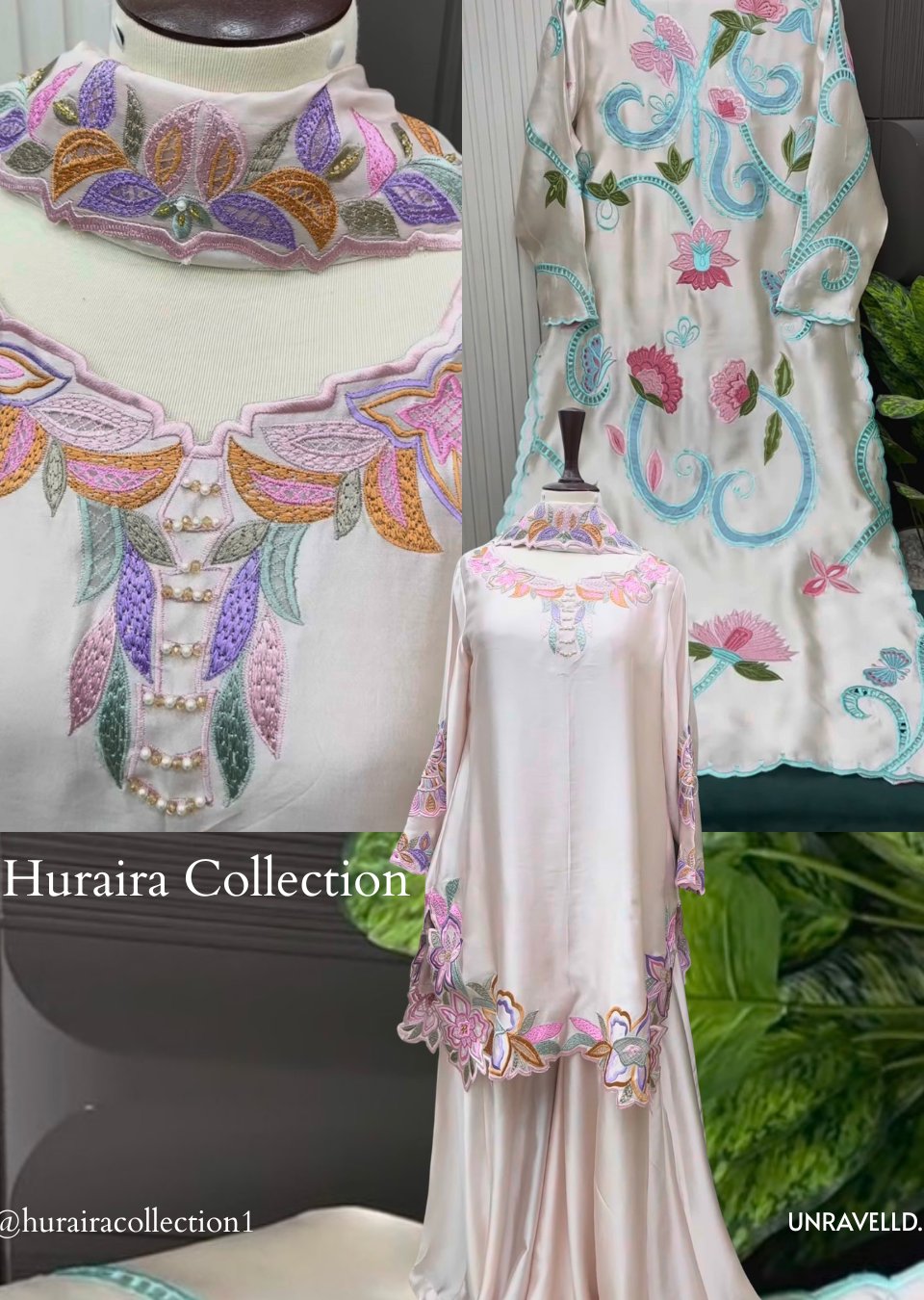
Colour, finally. Shell-pink and ivory satin with cutwork motifs outlined in lilac, mustard, sage and aqua. Leaves frame the neckline, pearls run down the placket, and big flowers bloom at the hem. Proof that restraint is a choice, not a rule. The best cutwork doesn't announce itself from across the room. It waits until you're close enough to notice what isn't there.