The White Kurta’s Power, Rewritten by Eight Pakistani Labels
Silhouettes stretched, then shrank. Colours cycled in and out of favour. Prints arrived loud and left quietly. Through all of it, the white kurta stayed exactly where it was: in every man's wardrobe, pressed and ready. That's not luck. It's design. A white kurta asks nothing of you. Pull it on with a simple shalwar or straight trousers and you're done. Clean lines, nothing extra.
It reads intentional without looking like it tried. A mandarin collar, a short placket, a fabric with a quiet texture if you want one. For the minimalist, this is the entire wardrobe in one piece. Here's what most men miss: the white kurta is only a blank canvas if you leave it that way. Layer a waistcoat over it and the whole outfit sharpens. Structure meets softness.
A crisp collar, a row of buttons, a pocket square if you're feeling it. Put a sherwani on top and it becomes a ceremony. This is the base of every wedding, every Eid, every occasion that asks you to show up properly. The kurta does the quiet work underneath. The sherwani takes the room. Or go the other direction entirely. Tonal embroidery down the placket. Detailed cuffs. A worked collar.
A sherwani so densely threaded it catches light on the runway. White on white, so the craft only shows up when someone's close enough to see it. This is maximalism without a single extra colour.
Eight Pakistani labels, eight ways to wear the same idea:
BEMEN
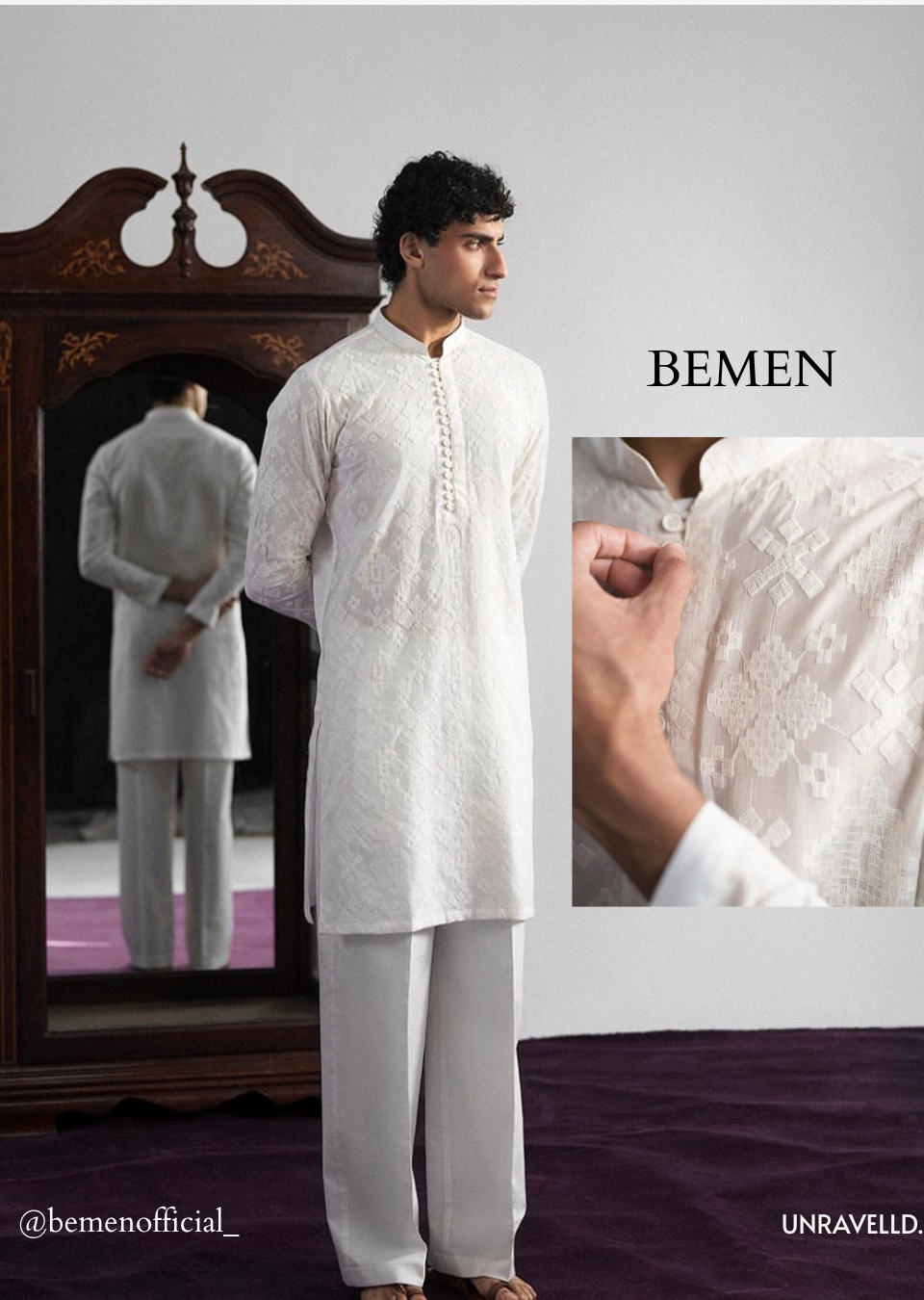
Texture, all over. Geometric threadwork runs from collar to hem, and a long line of covered buttons keeps the front clean. Straight white trousers underneath. It's tonal, so it stays calm from a distance. Step closer and the detail takes over.
AZURE MAN
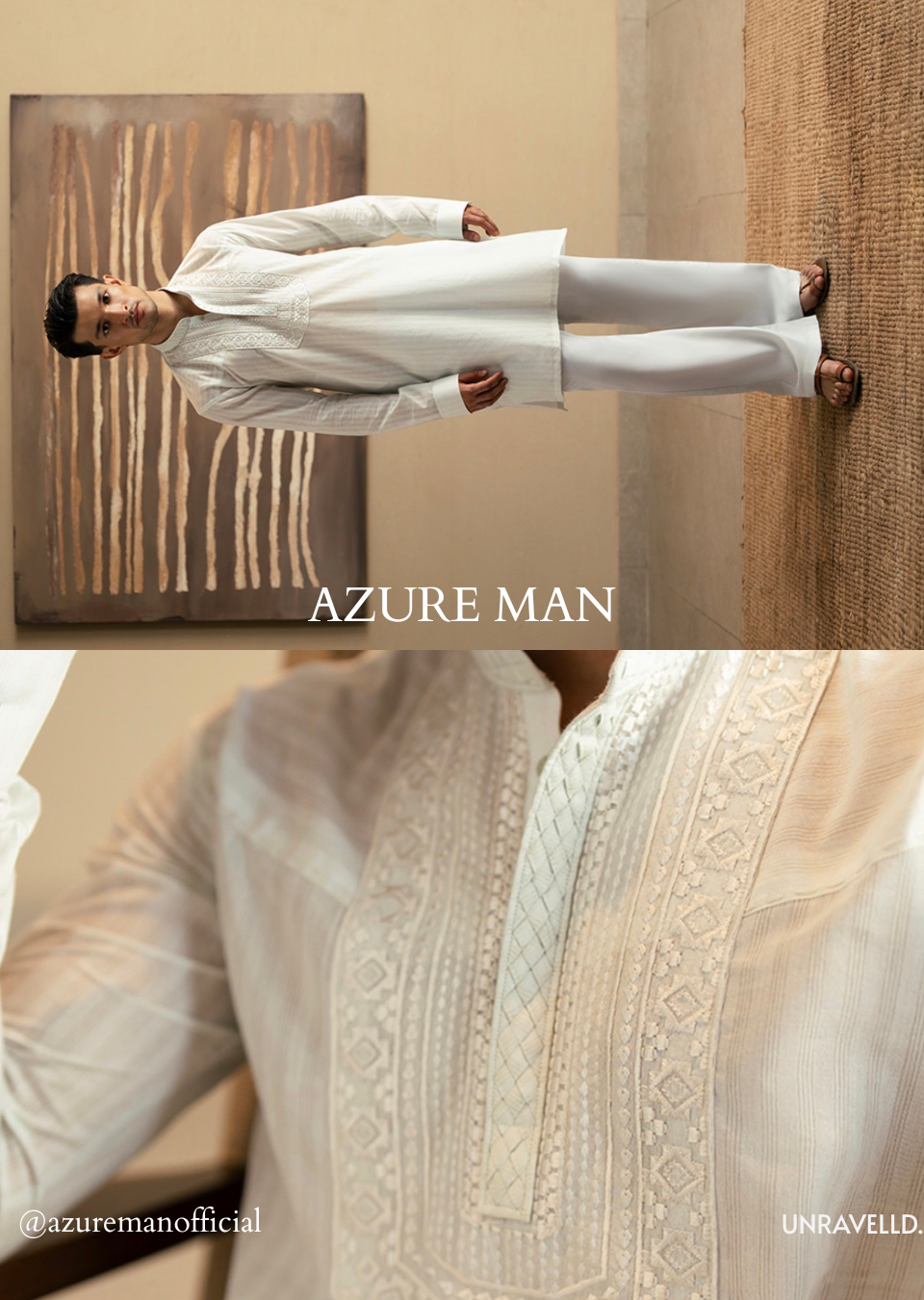
The middle ground. A finely striped cotton with an embroidered panel framing the neckline and placket. The rest is left plain. Wide trousers and leather sandals finish it. Easy enough for a lunch, considered enough for a mehndi.
ISMAIL FARID
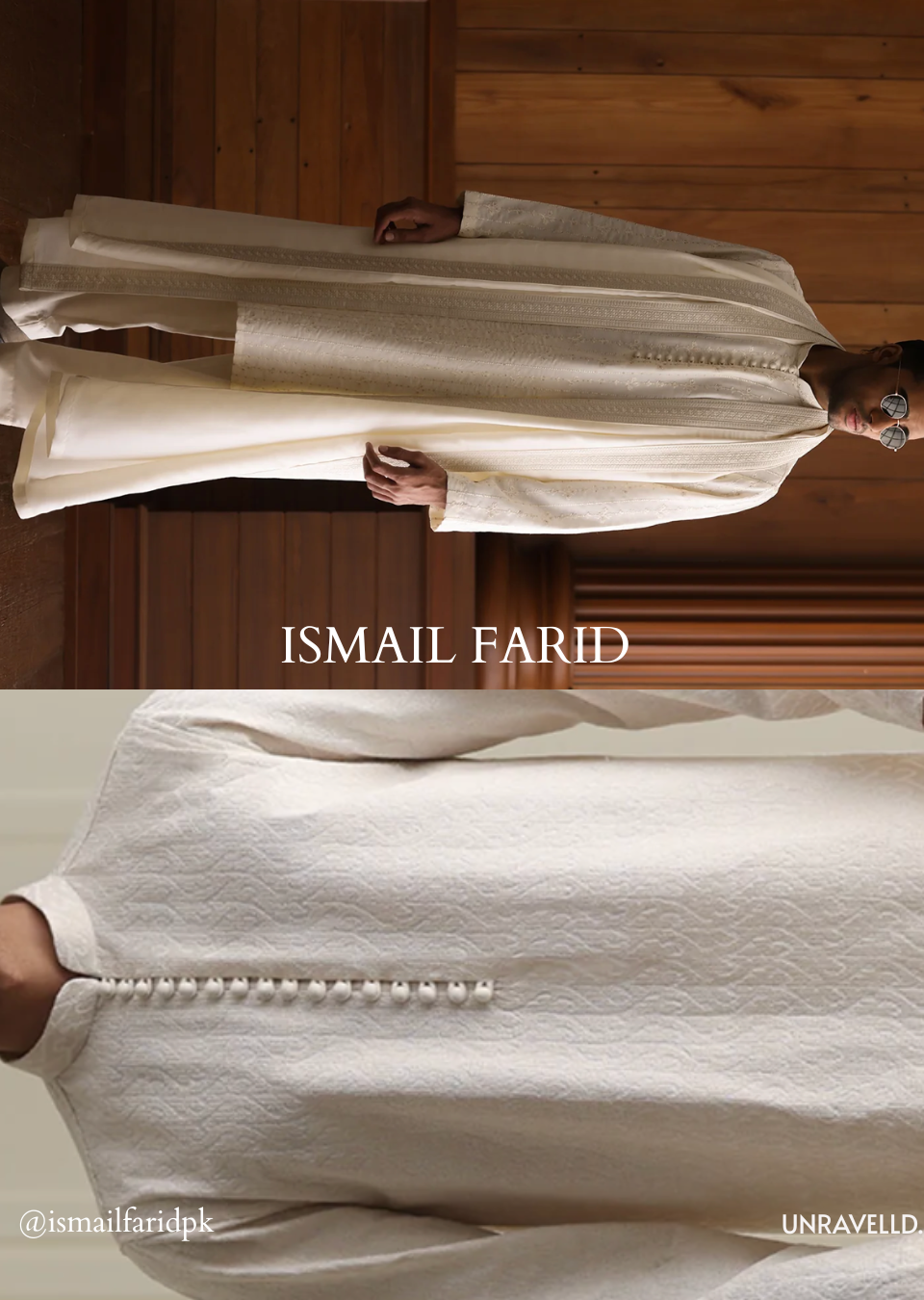
This one is built for occasions. A softly textured weave, a long column of covered buttons, and an open overlayer edged in embroidery on top. Proof that white can carry real ceremony without borrowing any colour.
DINERS
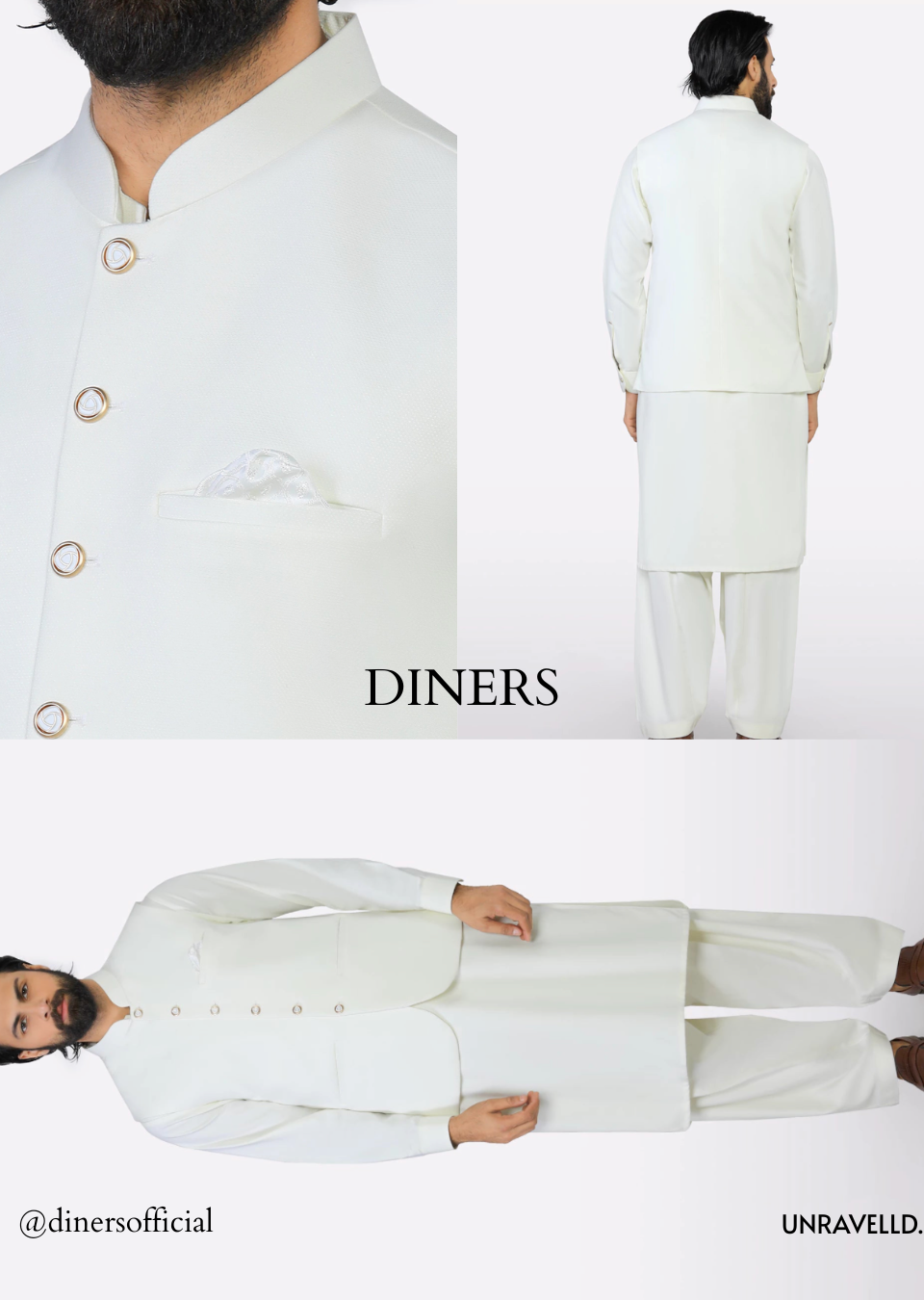
The waistcoat move, done right. An off-white waistcoat with ringed buttons and a folded pocket square over a plain kurta and shalwar. The kurta stays simple so the structure can do the talking.
ALMIRAH
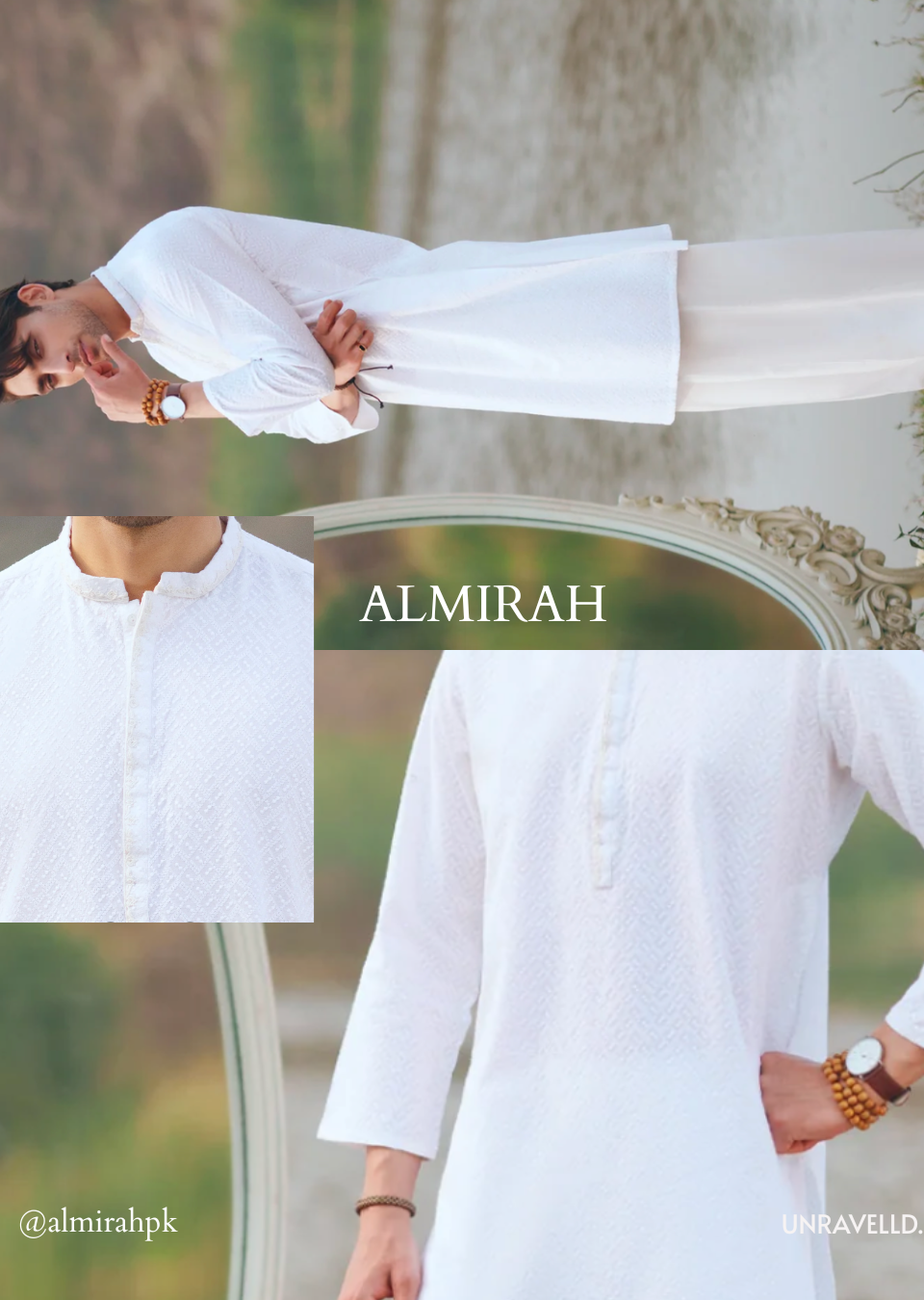
Soft and relaxed. An allover textured white with a narrow placket and a gentle collar. Worn loose, with a watch and beads at the wrist. The kind of kurta you reach for without thinking.
CAMBRIDGE
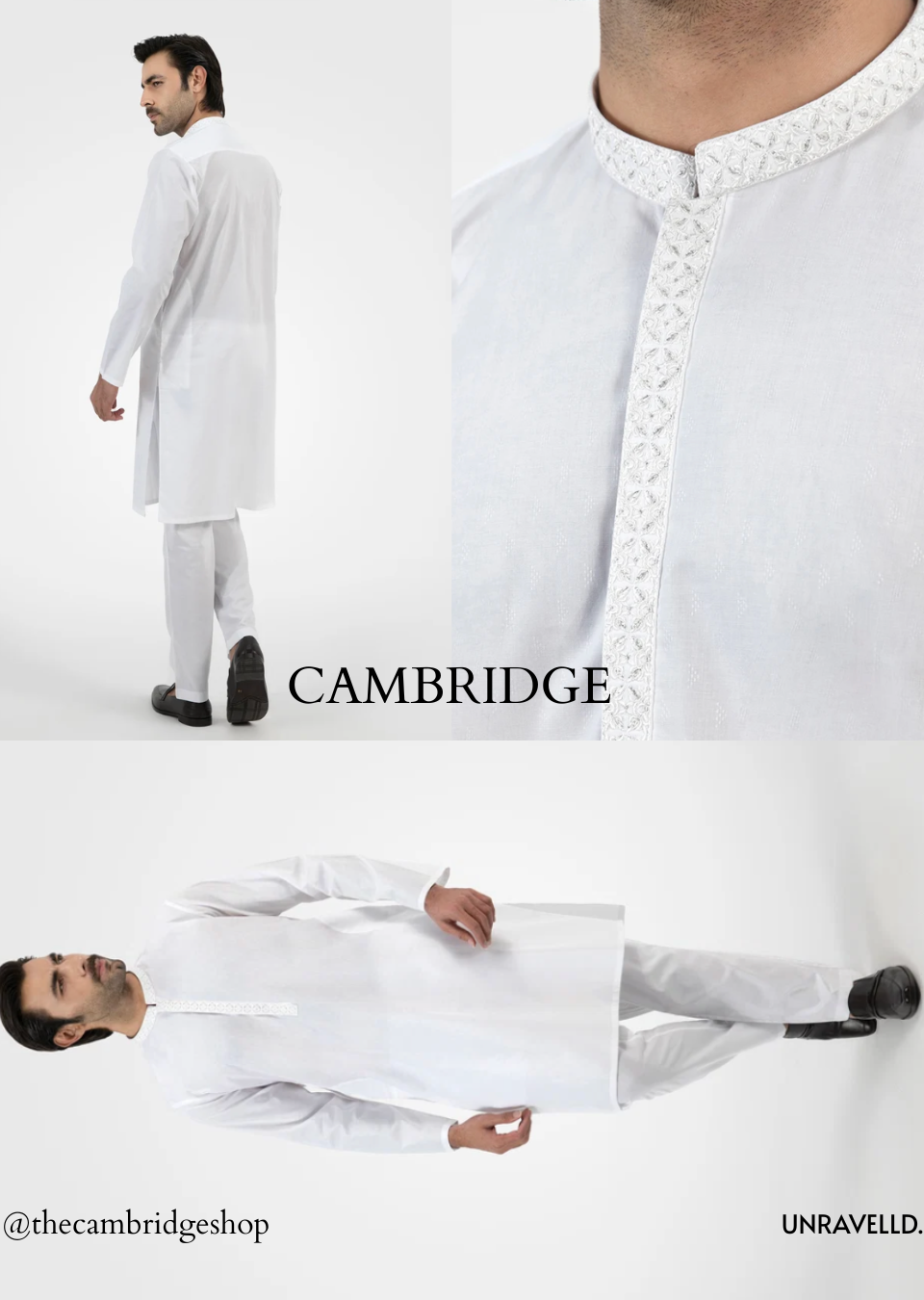
Crisp white, one statement. The embroidery sits only on the collar band and down the placket. Everything else is clean. A small detail that makes the whole piece look finished.
ZELLBURY
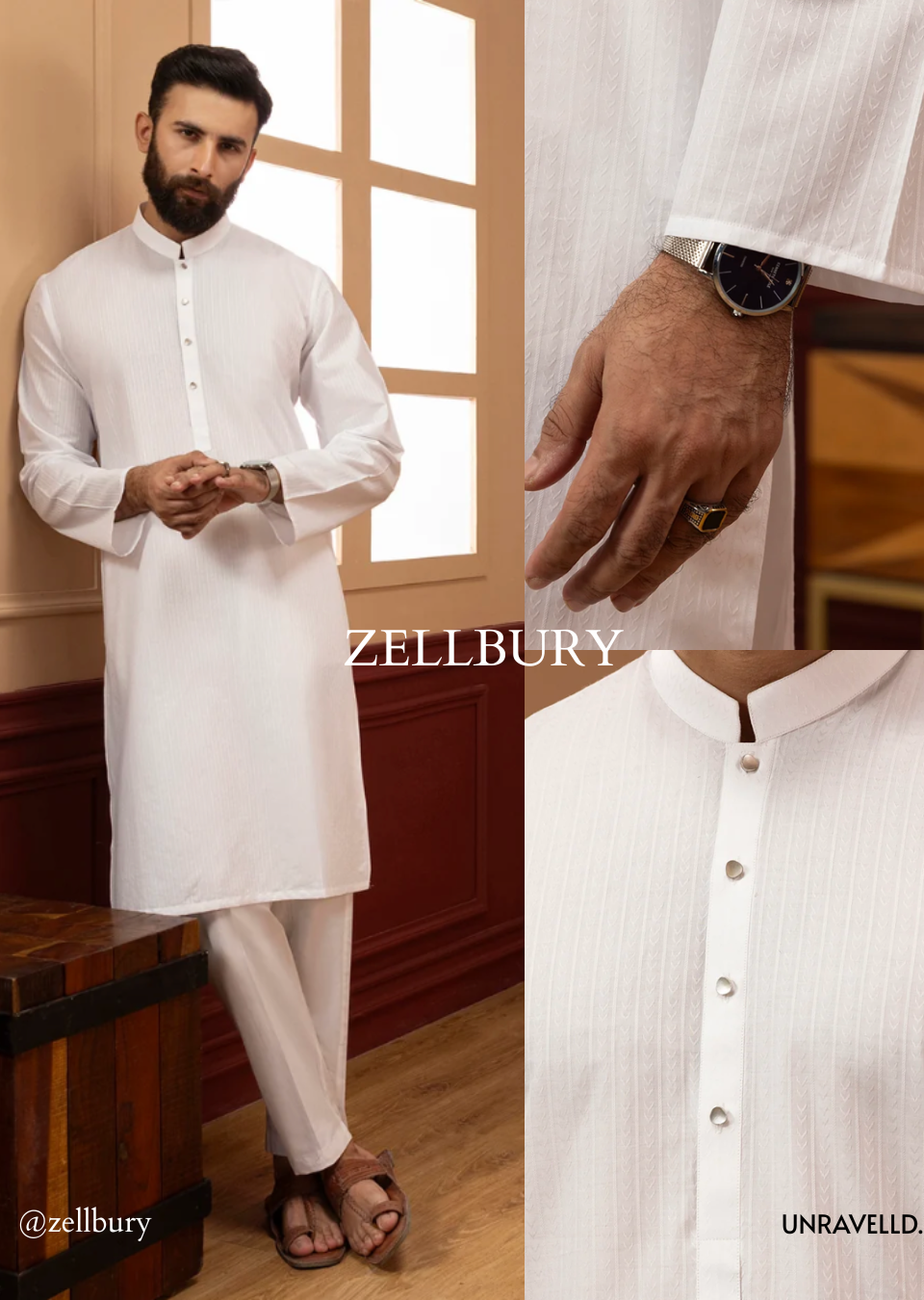
The everyday classic. A fine woven stripe, a mandarin collar, a short row of metal buttons. Straight shalwar, peshawari chappals. Nothing to figure out. Just wear it.
AMIR ADNAN
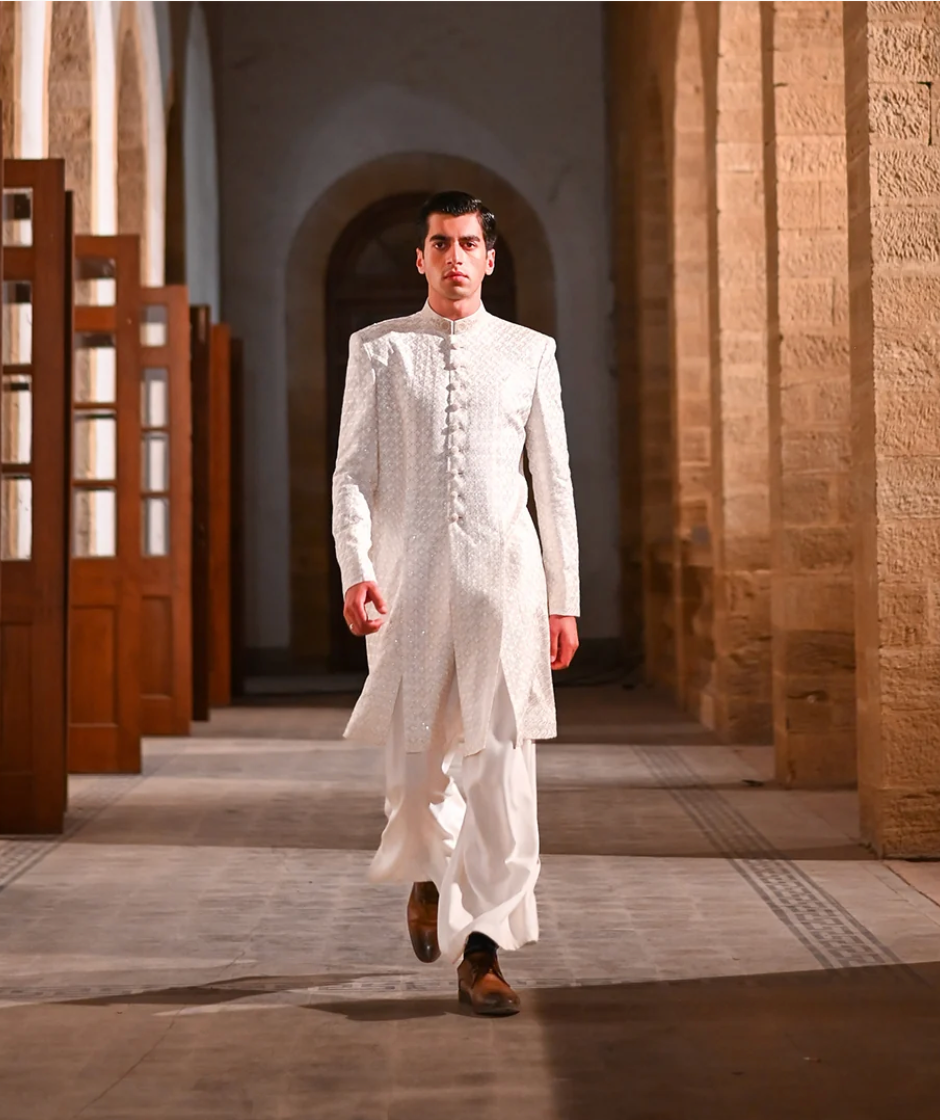
The house that made the sherwani modern. Amir Adnan has been dressing Pakistani men for occasions since 1990, and the white kurta is where every one of those looks begins. Think ivory and cream, hand embroidery kept tonal, and a sherwani built to sit over a clean base. This is the ceremony route, done by the label that wrote the rulebook. The bottom line is every man needs one.
Not because it's trending, but because it never was. And it never will be.